
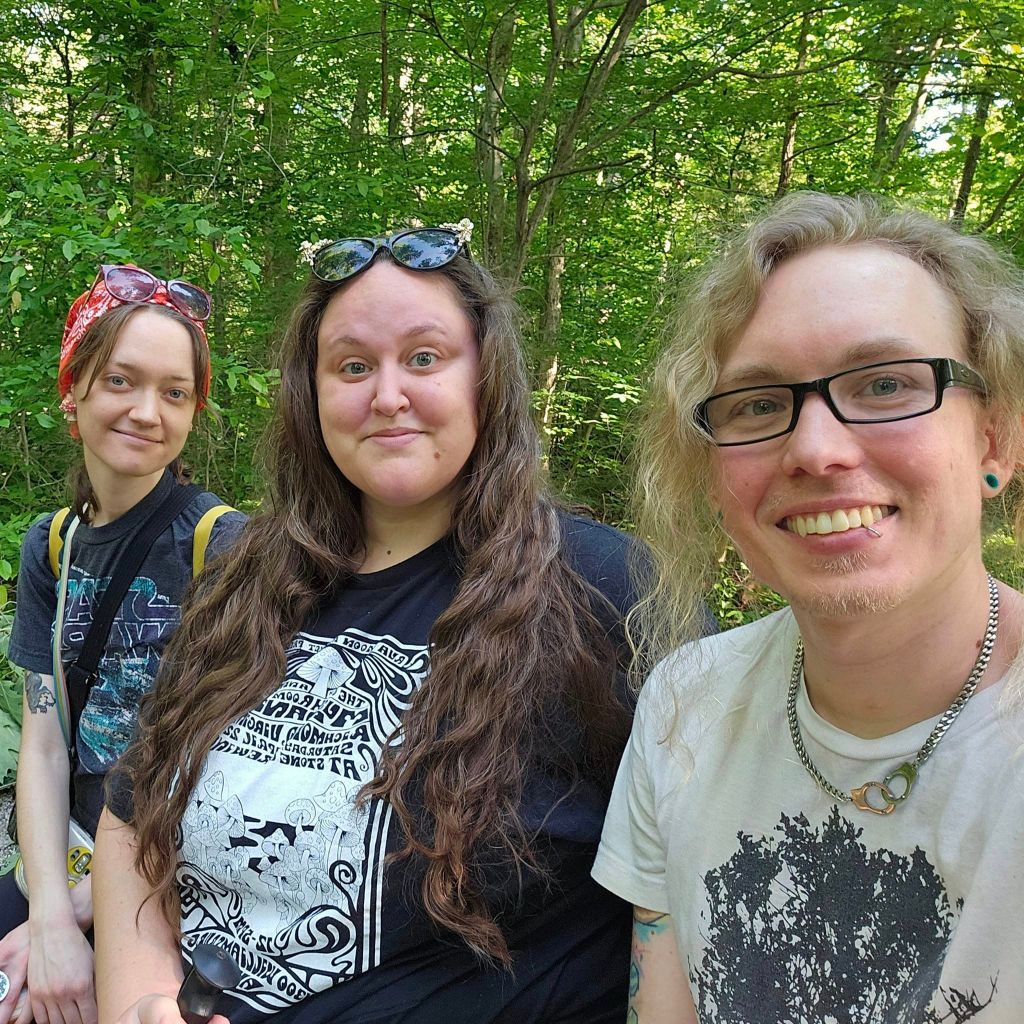
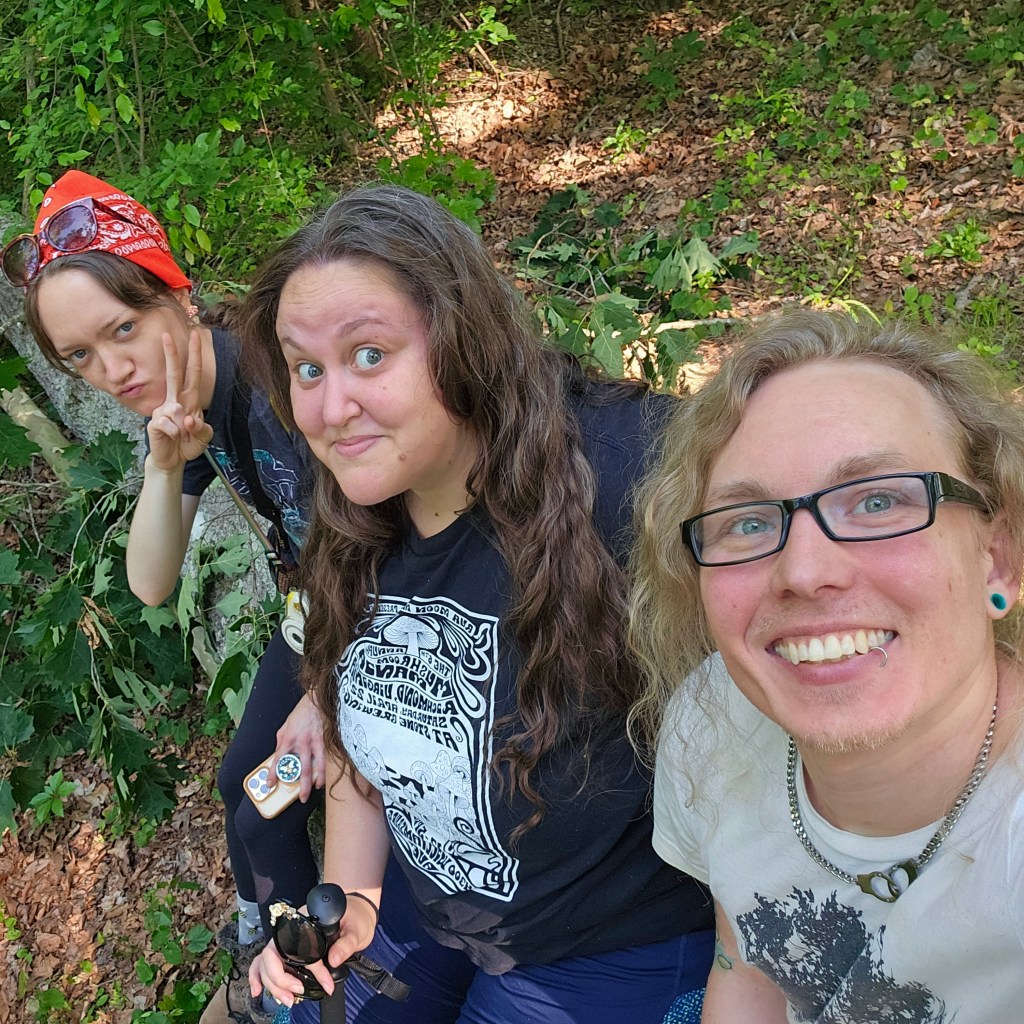
Let me ruin it for you, we didn’t find anything we wanted to take. That being said, after our exploration of the Robert W. Duncan Wildlife Management Area, I highly recommend taking a look for yourselves. It was by far the most wild feeling hike I’ve done and was such a good time. The company of my two close friends, Asia and Iain, certainly helped. Here’s how it went.
So Why a Wildlife Management Area?
Wildlife management areas are primarily used for hunting and fishing. Which leaves them practically empty in the summer when a wide variety of mushrooms, berries and more are popping up. WMAs are minimally altered unlike parks and campgrounds. You won’t find bathrooms, water fountains or manicured trails which means you ALSO won’t find big crowds, small children or(in many cases) other foragers. Foraging for personal use is allowed in all Virginia WMAs. You can even camp if you get written authorization through their website. Virginia WMAs are a great choice for folks who want a more natural feeling woodland experience.
Licensing Process
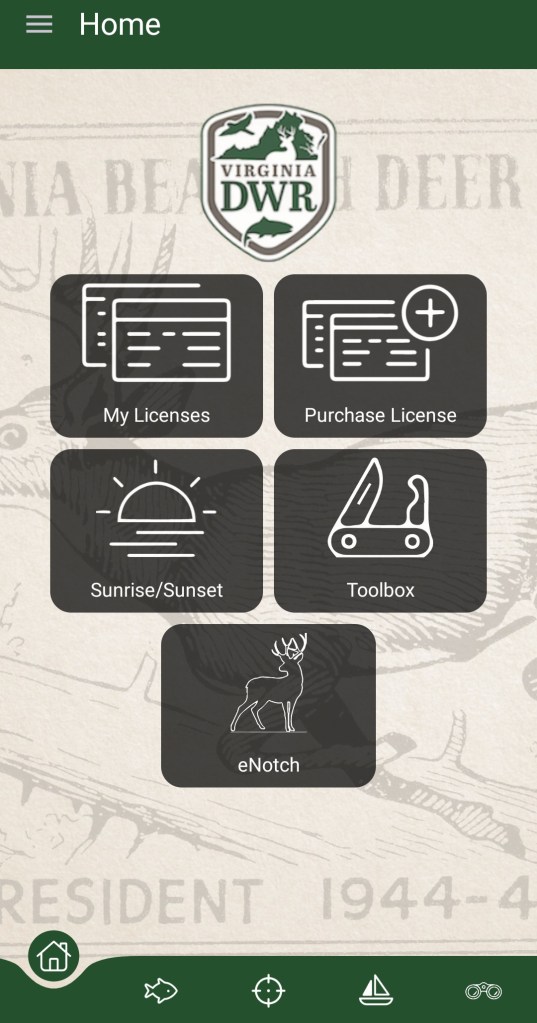
In order to explore a Virginia WMA you need either a valid VA hunting/fishing license or a WMA access permit. The access permits are available for $4 a day and $23 a year. There are also group rates. I opted for the annual pass and paid a little extra to get a fancy hard copy for my wallet. Iain and Asia purchased their day passes in the week leading up to our adventure. All the options give you access to any WMA and public fishing lake in Virginia. Getting the passes was pretty simple. You can purchase online here or via the Virginia DWR app. The app is great for purchasing and displaying your licenses, however many of the other features just open the website itself.

Safety Notes
Since WMAs are intended primarily for hunting and fishing, there are a couple of extra safety things to keep in mind. Most importantly you must be aware of active hunting seasons. A list of VA hunting seasons is available online. Even in between seasons, it is vital to keep in mind that poaching is real issue and so hunters MAY be out regardless of the time of year. During hunting seasons you are required to wear high visibility gear and I highly recommend wearing a blaze of some kind any time you are in a WMA, just in case. Though I’m a bit of an over cautious person. Since we were between seasons, we chose simple neon bandanas instead of my hi-vis vests. I did bring a couple vests in my bag in case we felt the need for more visibility, but we were alone for most of our time out there.
My Hiking Kit
Anytime I go in the woods, even if it’s a popular trail or local park, I bring my simple hiking bag. Part of it is to build the habit, however nature is unpredictable and there is no such thing as over-prepared. When putting together a foraging/hiking/outdoors kit, it’s important to personalize it to you and your needs. Think what YOU would need for 3 uncomfortable days stuck outside. I focus on sleep because staying in the woods, even under the best conditions, is work and a half decent sleep can make that work a lot easier. Most of all, I recommend versatile items that give you the most uses with the least weight and hassle. Here are a few of my favorite hiking kit items.
- Journal- In my outdoors journal I take notes on anything I think I might need when I’m in the woods with no internet access. First aid info, plant IDs/uses, animal behavior, edible insects and more are detailed in my journal. It’s also a great way to help me retain new outdoor lessons.
- Cling Wrap- I chose this because of the number of uses. Weather proofing, wound care, cordage, food storage, simple shelter building etc. Dry is important to your health and comfort so I feel better knowing it’s in my bag just in case.
- Crappy Hatchet- One of my first time camper buyers remorse items. It’s lightweight, can chop or dig, includes paracord and a ferro rod, so not a bad item to have in a bind, but the hatchet itself though is far from ideal. The lightweight and slim design does you no favors when chopping wood. However, it’s better than nothing, so I’m glad to include it.
- My kit also includes ponchos, trash bags, collapsible water bottles, a Nalgene, granola bars, first aid, a compass, a multi-tool, my mushroom knife and bag, a bear bell and some other stuff I can’t remember in the moment.

Choosing a WMA

Like with most of my hikes, I chose this trail using the All Trails app. It’s mostly reliable and if something IS inaccurate in the description, the comments are quick to point it out. Due to an old injury, I am very picky about my trails and this is a great tool for choosing foraging locations. If I’m looking for lion’s mane mushrooms I’ll look for trails near water and beech trees in the photos. If it’s morels then I want flood plains and tulip poplars, and so on. Not every WMA is on All Trails, but a few are and Robert W. Duncan was the most interesting to me. The highlights for me were little elevation, plentiful wildlife, swamps and an abandoned house. Most importantly, the photos showed plenty of downed hardwood trees. One of my foraging goals this summer is find a fresh chicken of the woods, so this seemed like a great place to start my search! And so the three of us packed up and piled in my car to make the 40ish minute drive to Frog Level, Virginia.
Some Bad Directions…
I’d never had an issue with the All Trails navigation, so I just hit the button and started driving. I should have noticed something was off when we drove right past the labeled entrance. Instead the directions took us to an uneven dirt road in the middle of an active construction site/quarry! My Taurus is a bit on the beefy side, but it was still a sedan on red clay and dust. We drove in circles looking for the entrance our map showed before finally deciding there wasn’t one. We were trying to leave and following behind a big grader when we were approached by a very confused supervisor. I explained our predicament and he kindly directed us on how to escape. We just know they were laughing at us city slickers on our way out.
First Impressions
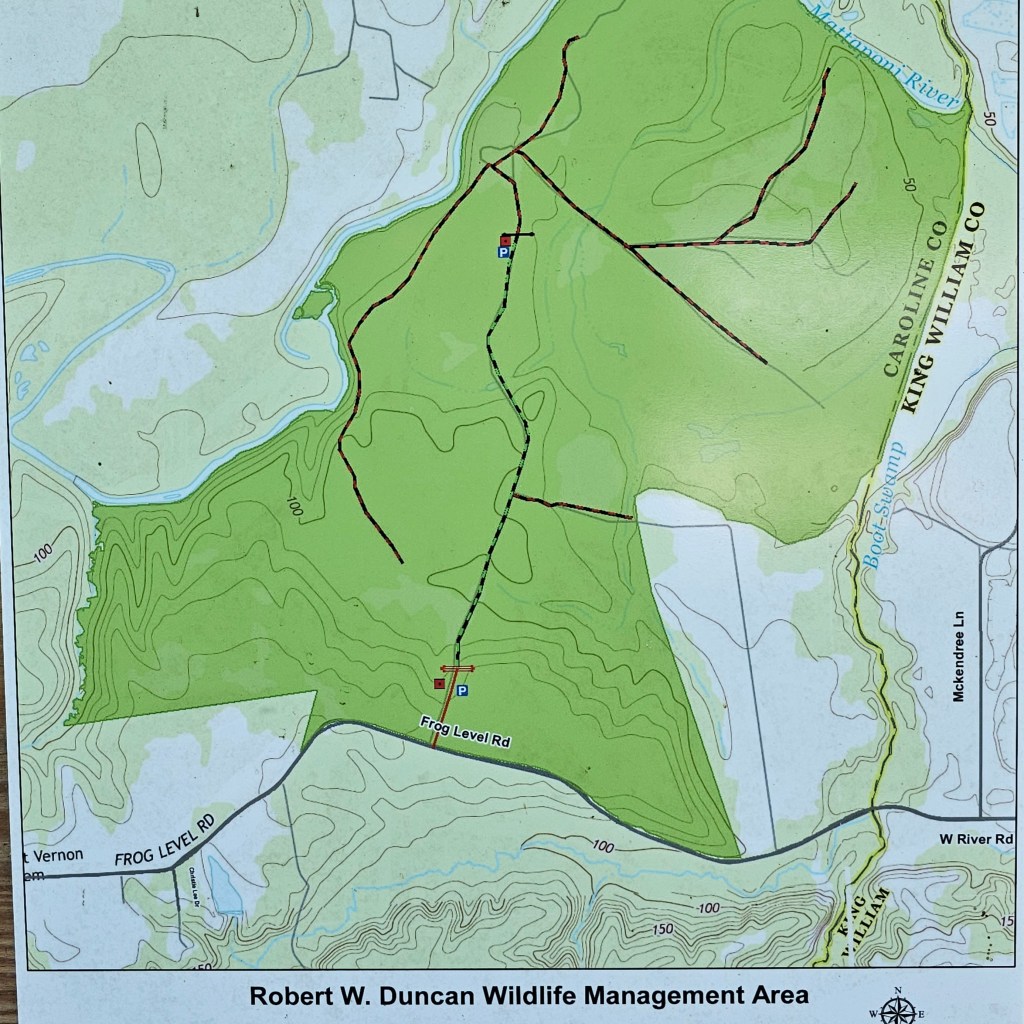

Once we found the actual entrance, we parked in the empty lot and got ready to go! This spot was not the one the directions first indicated, but we didn’t mind the added hike. The first thing we noticed as we got out of the car were spent shells. A LOT of spent shells. They were under our feet as we applied our bug spray and swung our bags over our shoulders. There was a large info board with a map, licensing info and a list of the current hunting seasons along with a few notices and warning about poaching. Once we had our gear, and Iain and Asia had their cameras ready, we headed down the overgrown gravel road that was the path.
Flora and Fauna Around the Swamp
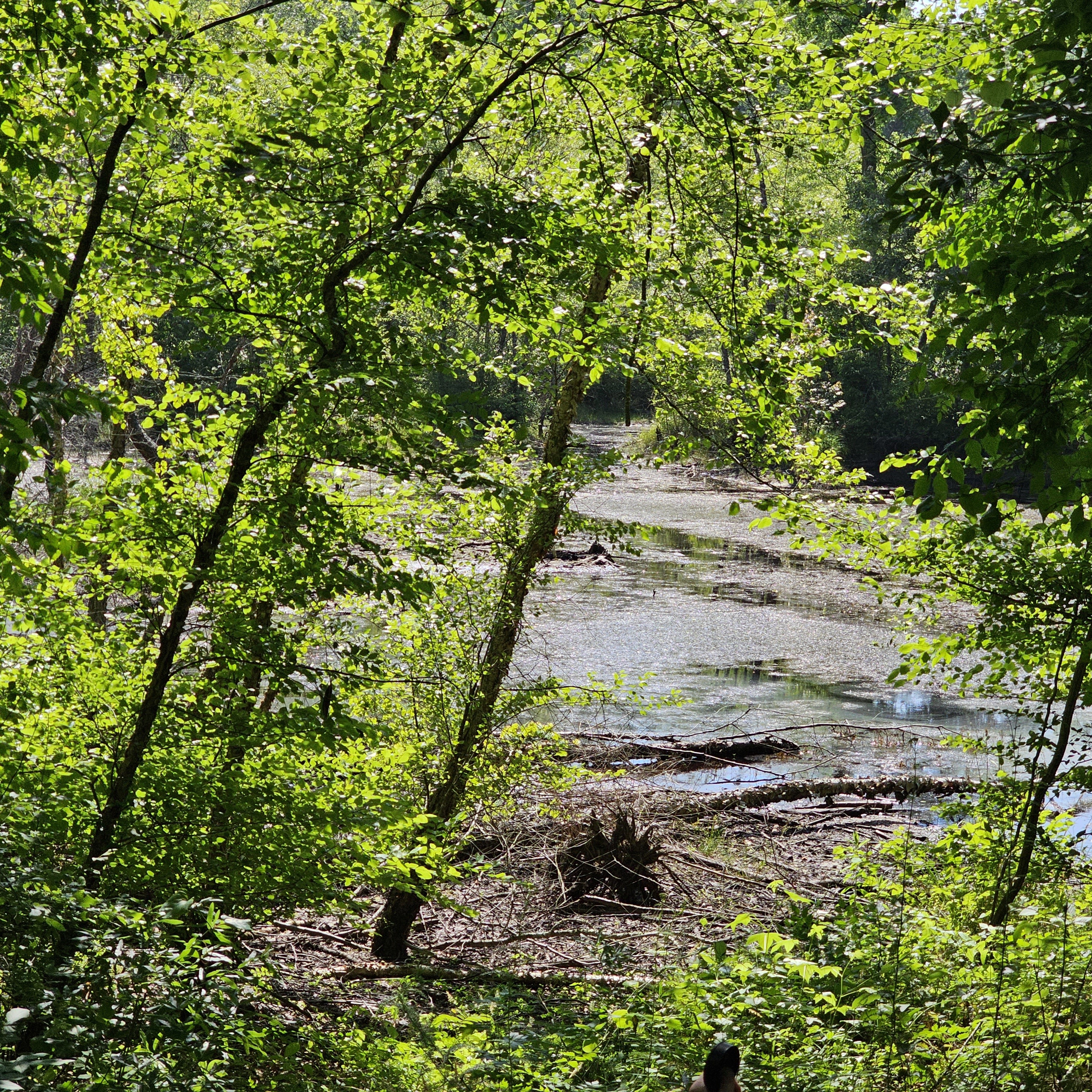
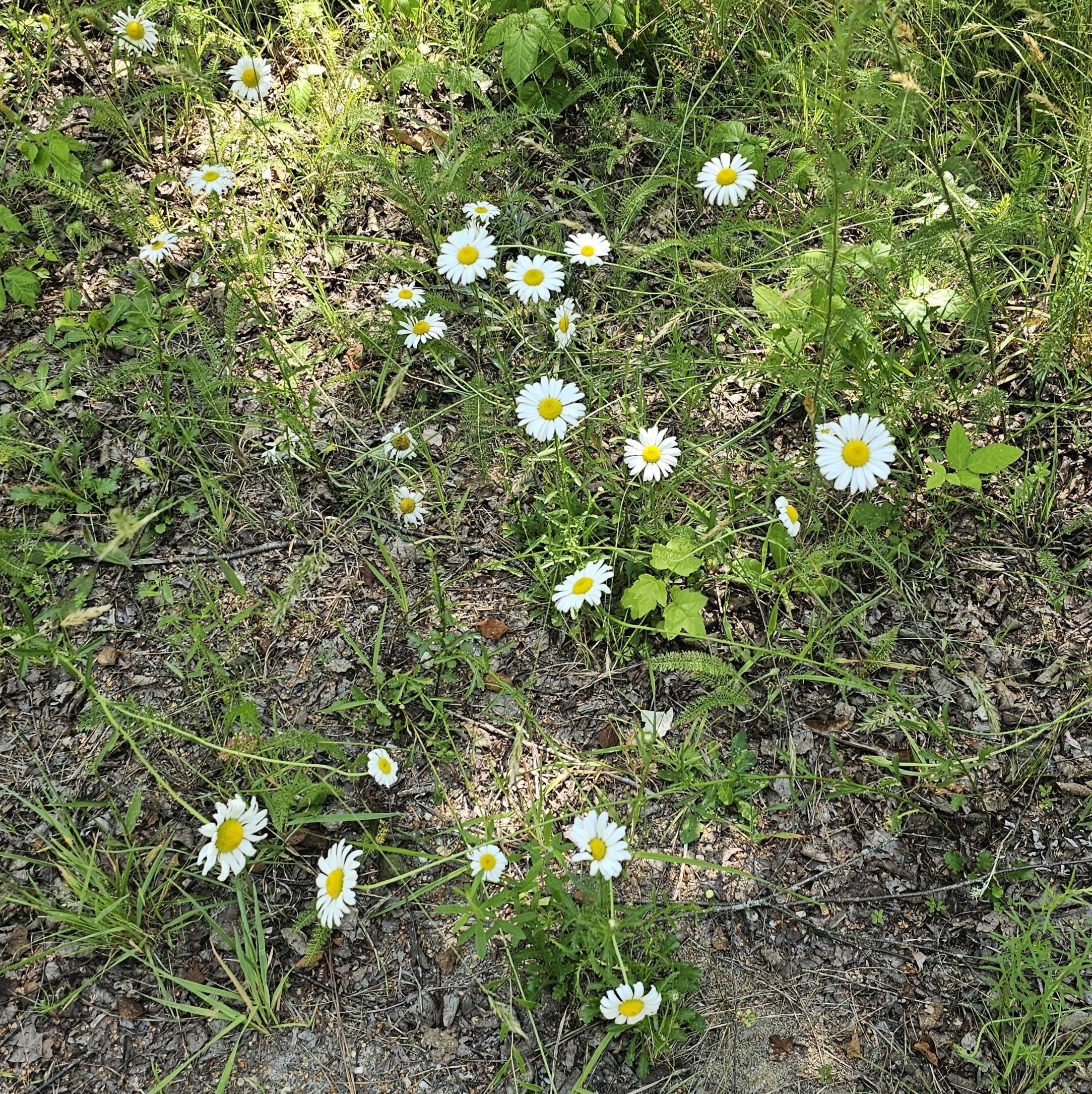

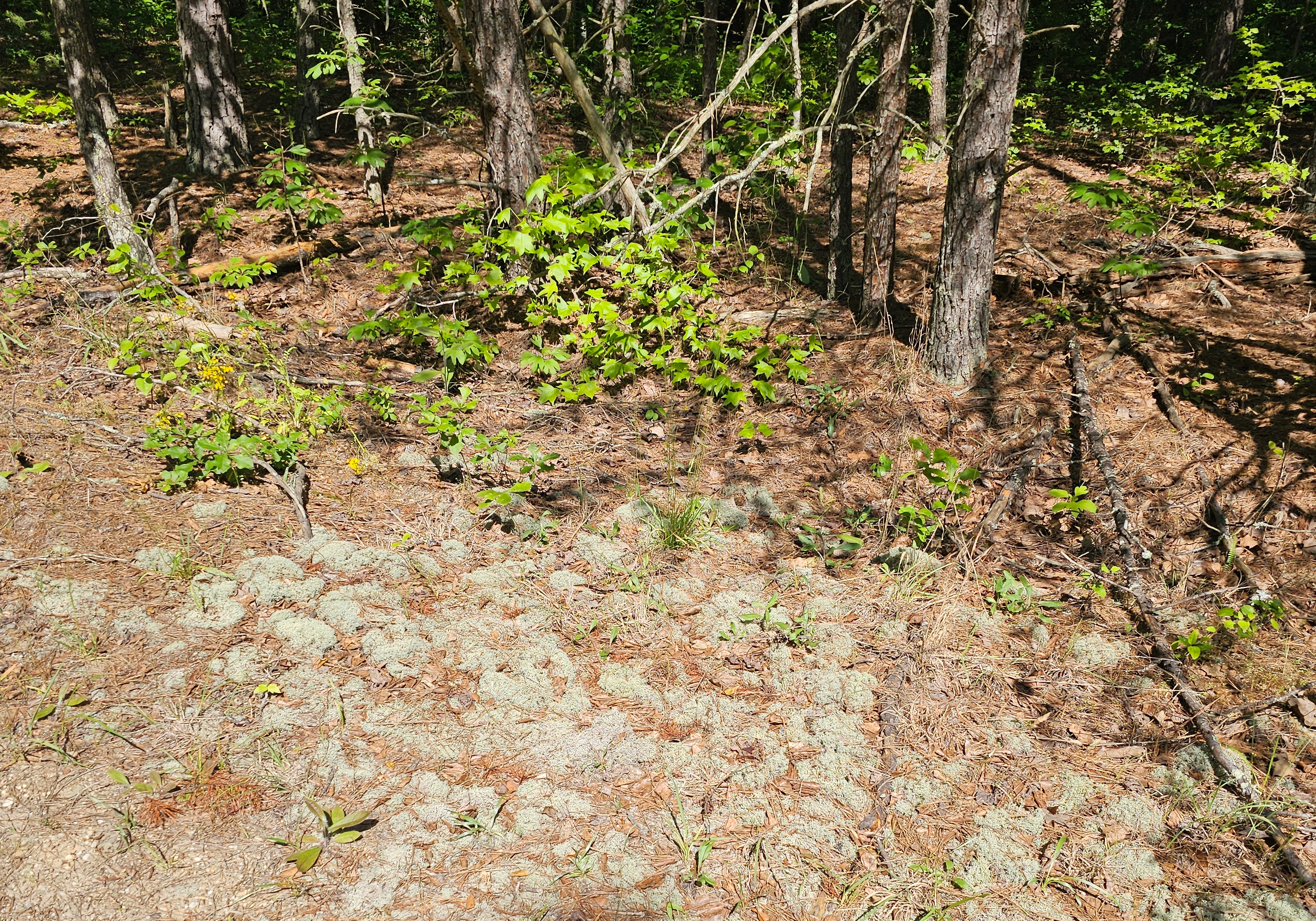
The swampiest part of our hiking was right at the beginning. Lots of pretty pools of dark water and, of course, lots of living things! Lichen, raspberries and sassafras were some of the first things we noticed.
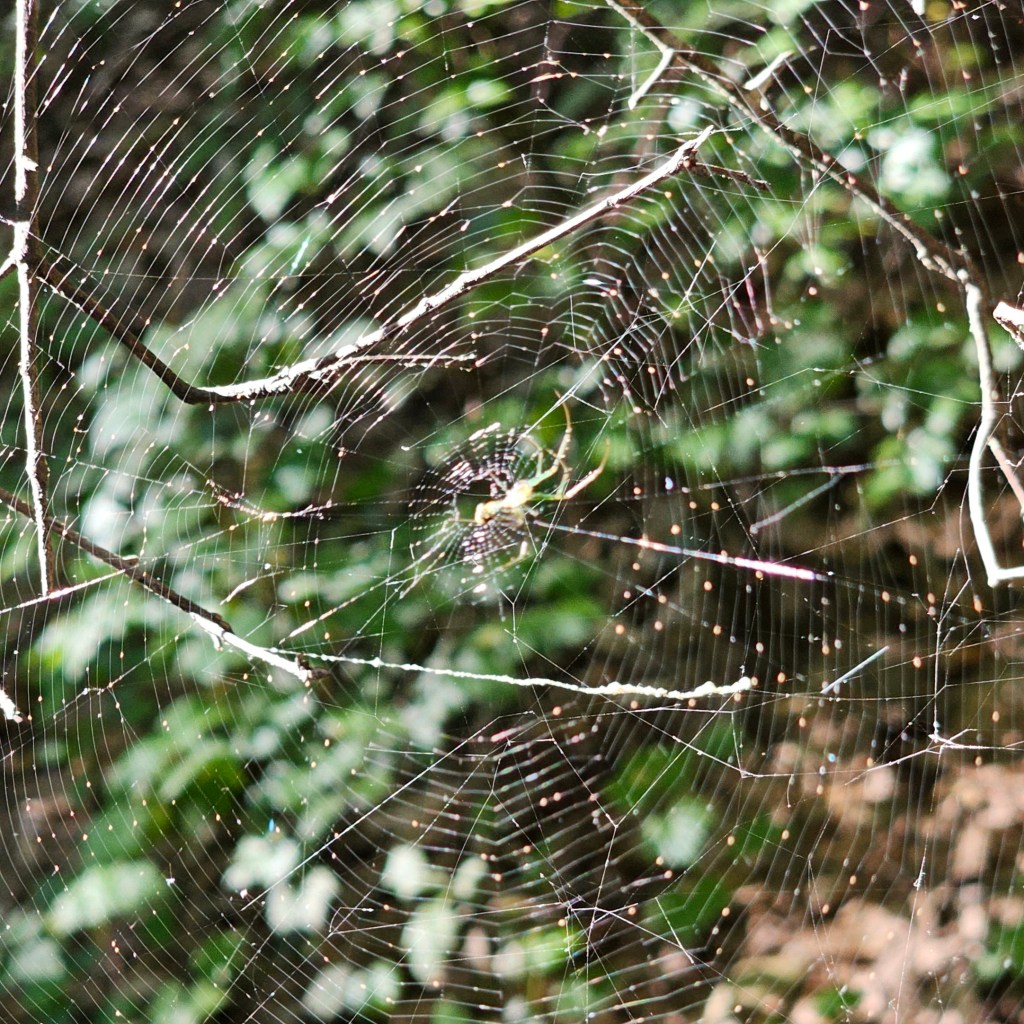
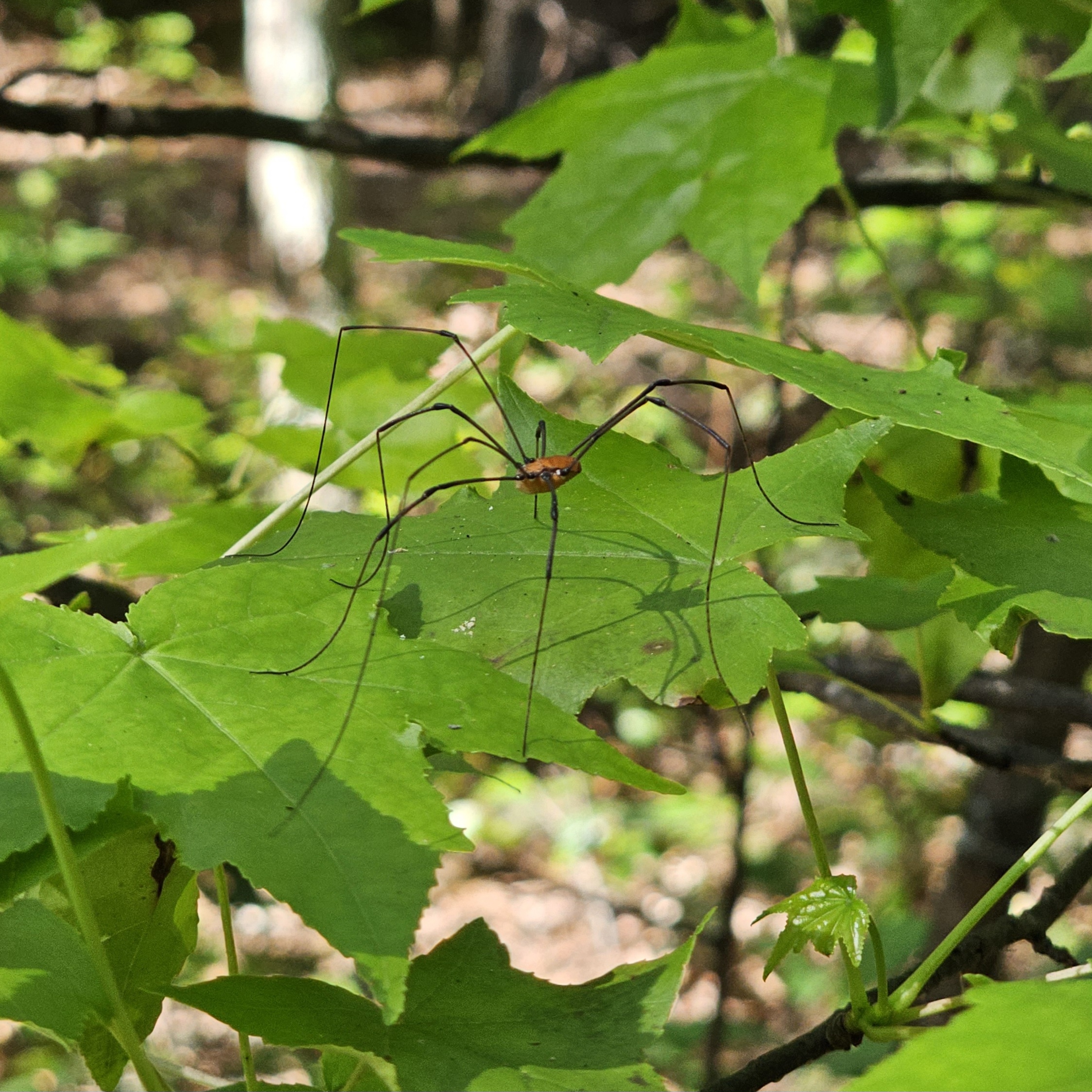
While it was not fun to navigate around the spider webs, I still loved seeing them and their creators. We also found a mourning cloak butterfly, a granddaddy longleg and the cutest little snail!


As far as vertebrates were concerned, we only saw a deer, eastern bluebird and a lizard in person. None were cooperative for photos. However we found evidence of a few other critters, including a few adorable raccoon prints and a snake skin.


Down the Trail a Ways

While there was an obvious and very wide path, it was much rougher going than what you’d expect on a state/national park trail. The weeds were tall and the ground was uneven, with the occasional large limb down. It gave the hike a peaceful and isolated feeling without being too difficult. We met a couple walking their dogs early on, but they left quickly and then we were alone. Being alone in miles of woodlands, even if it’s only a couple miles, felt amazing. With my bum leg I don’t feel comfortable going too far out into back country, so this was the perfect mix of wild and safe for me. I love state parks, but the natural feel of this space coupled with lack of crowds gave me the woodland experience I crave.

The Old Building in the Woods

One of the highlights mentioned on All Trails page for this location was this abandoned “house.” I love watching nature reclaim it’s space, so I could not wait to see this in person. It did not disappoint. The front room didn’t tell us much about the buildings history. There were a couple lounge chairs, a card table and mattress springs bursting thru the ceiling, but nothing distinct. However the back room gave us a lot of clues about this places’ past life…
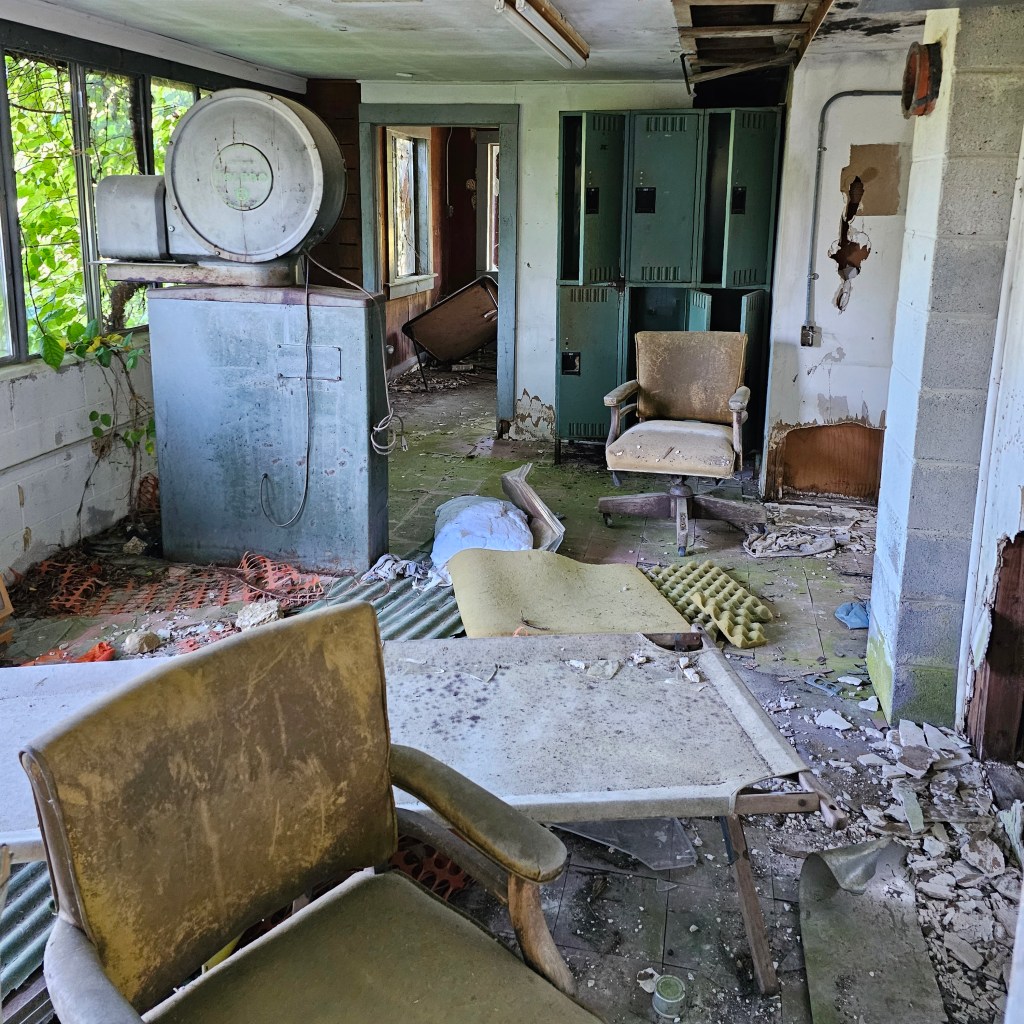
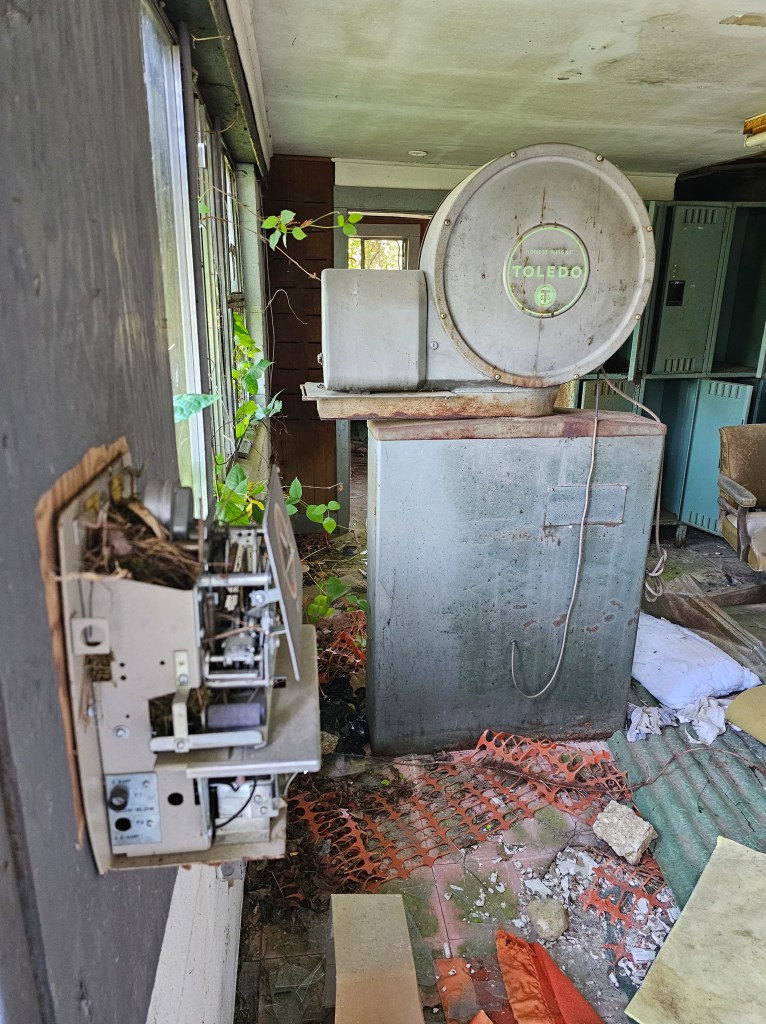
The back room definitely suggested that this was not a home, but instead someone’s workplace once upon a time. The lockers, old card punch machine(now with bird’s nest) and office chairs were the obvious giveaway, but I was initially confused by the cot. Luckily that big machine off to the side gave a little more information.
I took photos of the machine and looked it up when I got home. Turns out it’s an old scale. A Toledo True Weight to be specific. I couldn’t find this exact model, but my amateur opinion, based on the styling, is that it’s from the 1960s. Scales like this one are used to weigh farm animals, wild game and industrial equipment. My guess is that this one was used by rangers to make sure hunters were taking game within the legal limits. I imagine this place in it’s prime, some rookie drawing the short straw and needing to stay overnight at this station, weighing game during the day and watching for poachers and emergencies at night. I love thinking about how abandoned places like this looked when they were still in use. Though all I can do for this one is guess, it was still a really cool find.
The Mattaponi River

From the old station we continued down the river road. The path followed parallel to the river, but we had to go off trail a little and past an old campsite to actually see it. We were pretty high over the water, but it was still very pretty.
We Didn’t Find NONE Mushrooms
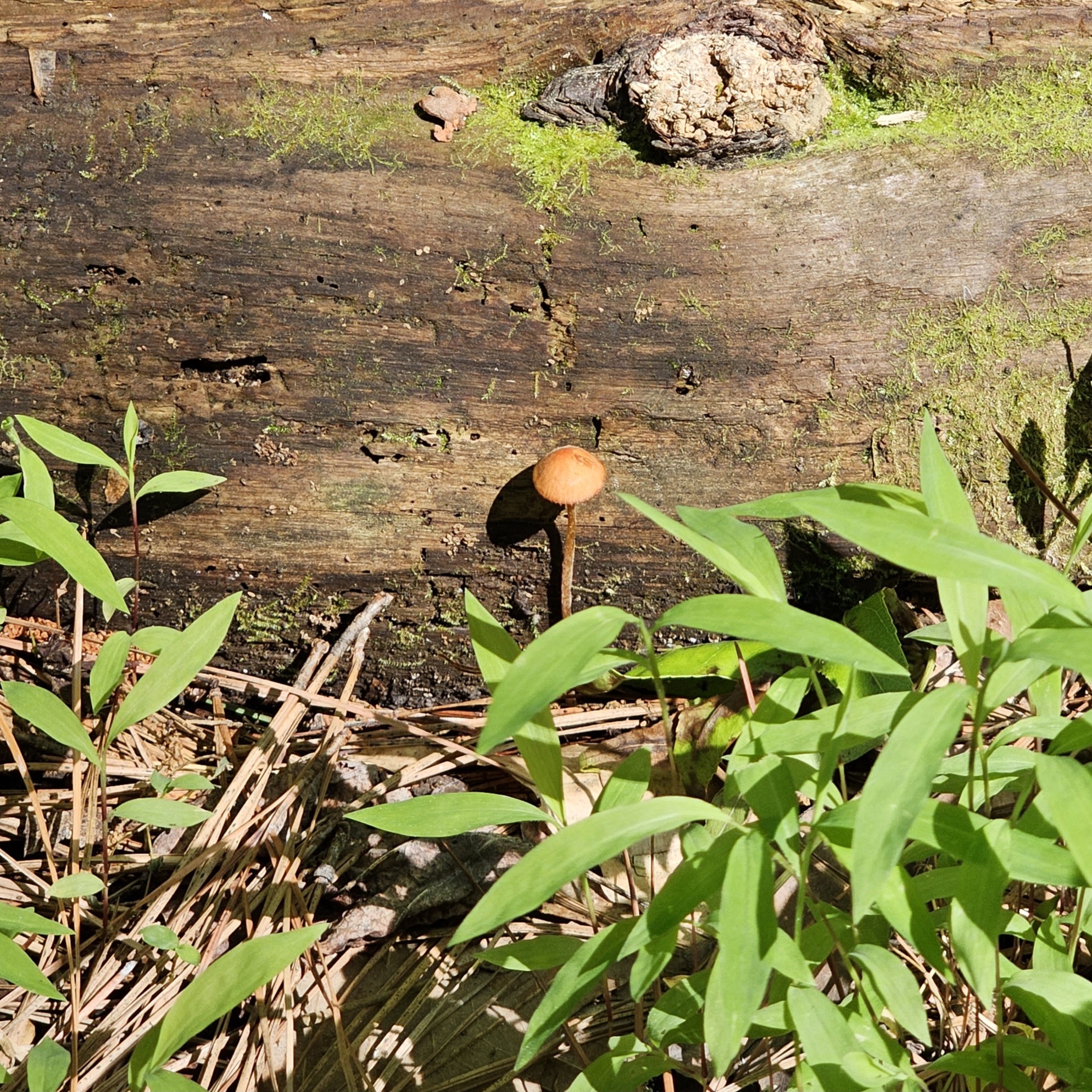


While we didn’t find the chicken of the woods I wanted, or any other choice mushrooms, we did find a couple little mushies worth admiring. Looks like some sort of conocybe, some sort of amanita and, I believe, a death cap. I’m basing my guesses on only these photos, so I would certainly take my ID with a grain of salt. Whether it’s forage-worthy mushrooms or deadly ones, I’m always glad to see them.
The Trail gets Rougher
As we walked beyond the river, the trail became more over grown with tall grasses and weeds. Clearly this section is not used quite as often as the first leg of our hike. But, hey, who doesn’t love the road less traveled? (Surprise! The answer is my ankles) There was lots of loose gravel to avoid and several large fallen trees to climb over. I had one scary tripping moment, but managed to stay upright. Luckily downed trees also make a great spot for a little rest and photo opportunities.

Choosing the Off Trail Risk
When we had looked at the map early on, we decided that instead of turning around at the end of the trail and doubling back, we would cut thru the forest directly to the parking area. It is always a risk going off trail even in populated areas. It’s worth noting that even experienced hikers and outdoors-men can become lost when going off-trail. The case of Geraldine Largay is one example that sticks with me. That being said, the connection was less than a mile across, the WMA itself was only a few miles total, so we felt the risk was fairly minimal in this particular circumstance. I wouldn’t say our choice was a mistake, but it was definitely hard going. Initially we found a decent game trail and were able to follow it single file for a bit. Along the trail we found evidence of predation, specifically piles of feather and small bones. My best guess is raccoon, possum or bobcat, but coyote isn’t an impossibility.
It wasn’t too long before the trail seemed to evaporate into the forest. In it’s place were tight grown plants and soooooo many thorny brambles. We went one at a time, often each of us holding a branch or two to let the next person get by safely. I used my walking stick to check the ground when it got swampy or to hold off brambles to help us get by. When we finally broke thru onto the established trail it was a relief! We were hot, a little dirty and I had plenty of scratches. I took a second to sit on the gravel and catch my breath before we went the last few yards back to the parking area. We did a quick tick check/removal and enjoyed a little time just sitting in the cars AC before heading back. Jamming to my current music obsession on the way.
The End!
I’m looking forward to returning to to Robert W. Duncan and trying more of Virginia’s beautiful WMAs. Next time I want to try one with a more prominent water source and fewer meadows. I’m still on the hunt for my chicken of the woods, so hardwood forests with lots of fallen trees are still my target. The ticks were a real issue so I’ll need to up my protections next time, but I’ll definitely be back out there soon. Overall, I absolutely recommend looking into a Virginia Wildlife Management Area for your next outdoor adventure. Happy foraging!
-Nicki
Try my Playlist
My current playlist is Bluegrass Joy. Feel free to give it a listen and see if it fits your next outdoor adventure.


 midnightthicket.com
Leave a reply to Asia Cancel reply